A Saree Is Never Made by "A Weaver." It's Made by This Weaver.
It’s easy to speak about handloom in general terms — the technique, the region, the tradition. What’s harder, and far more meaningful, is speaking about the individual hands behind a specific saree.
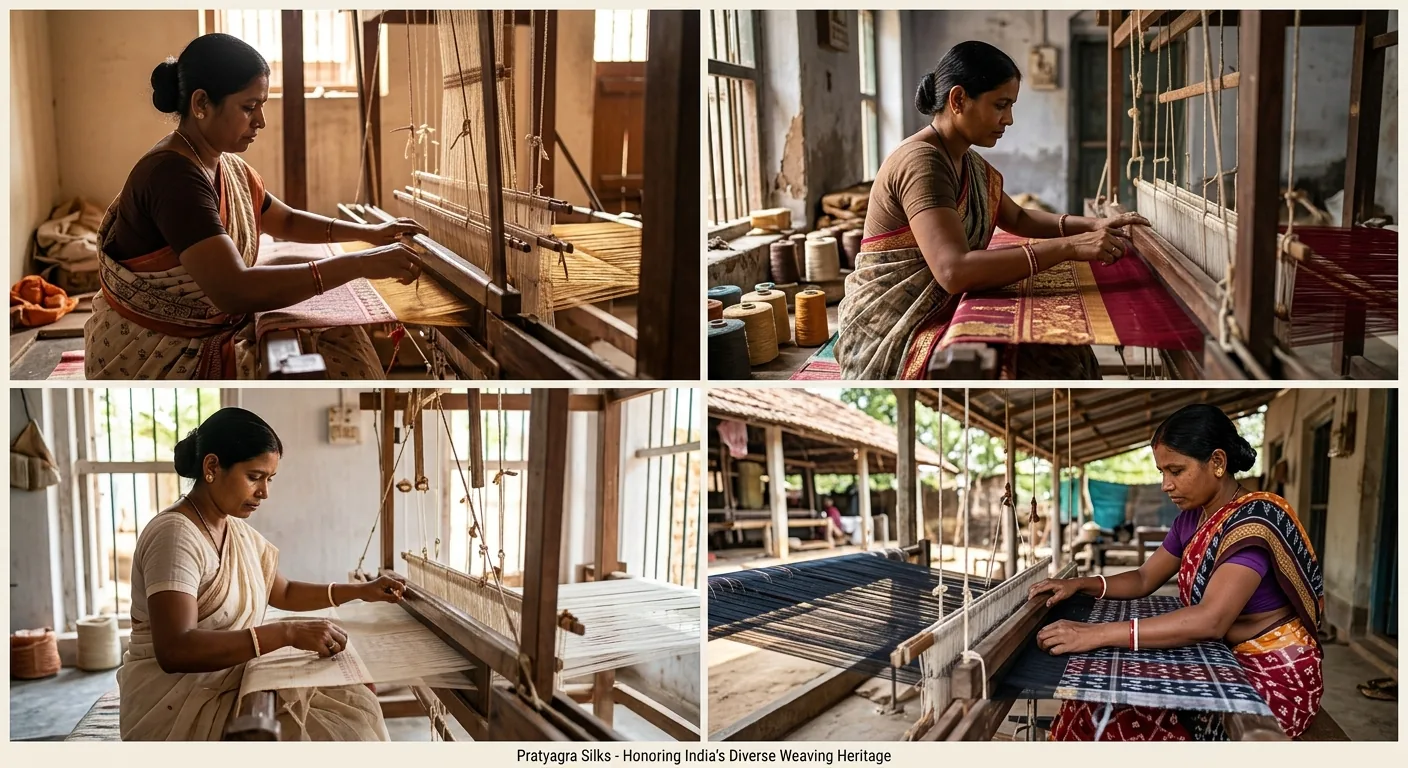
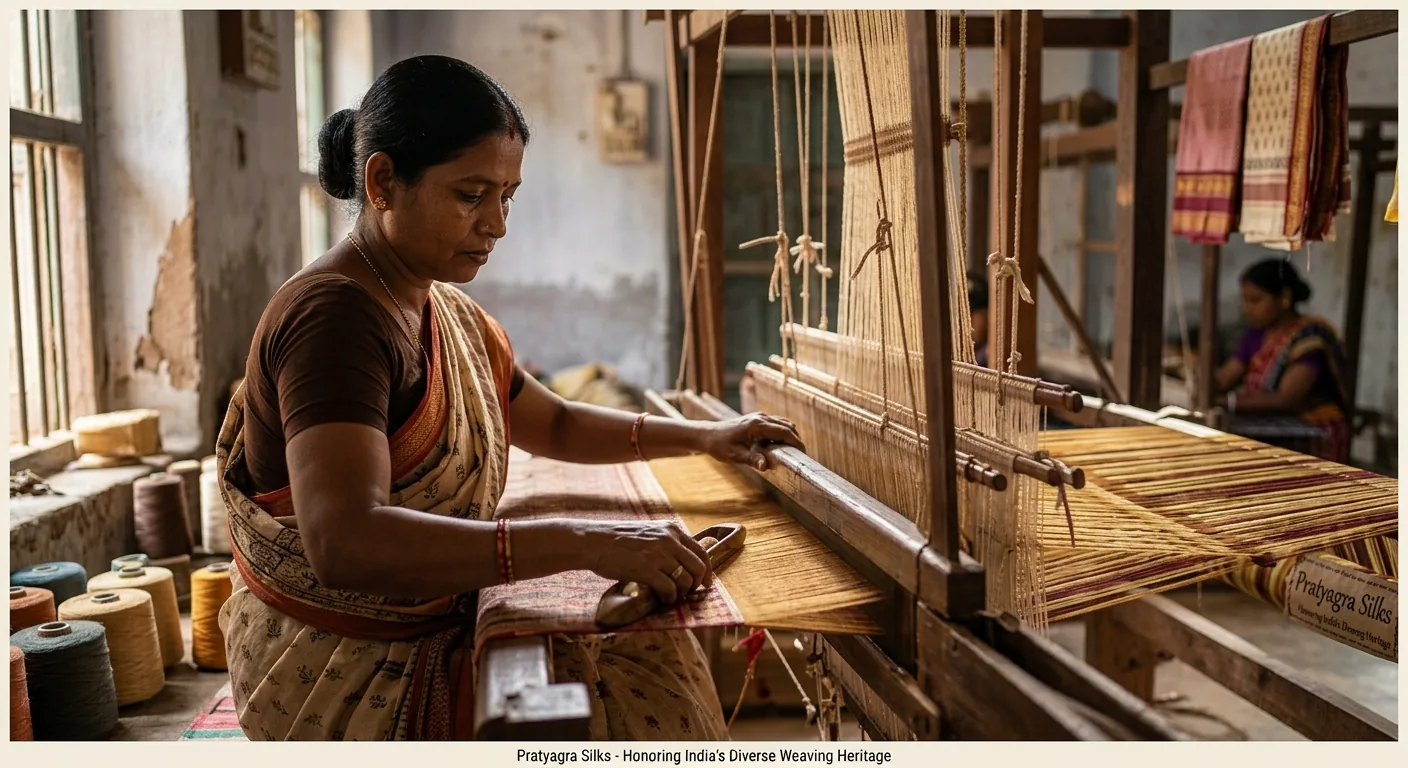
At Pratyagra Silks, we work with more than 50 weaving partners across India’s handloom clusters. Each one has a name, a village, a family history with the craft, and a technique refined over years — sometimes decades. This is our attempt to introduce you to them, not as a collective idea of “the artisan,” but as the individuals they actually are.
Who Are the Artisans Behind Every Pratyagra Saree?
Where Does the Craft Usually Begin for Them?
For most of our weaving partners, the craft isn’t something they chose as a career in the way we might choose a job. It’s something they grew up inside of — watching a parent or grandparent at the loom before they were old enough to understand what was being made. By the time many of them formally begin weaving, they’ve already spent years absorbing the rhythm of it.
This is part of why handloom techniques are so difficult to replicate outside these communities. The skill isn’t only technical — it’s inherited.
How Long Does It Take to Become a Master Weaver?
There’s no shortcut in this craft. Depending on the complexity of the weave — a plain silk versus an intricate Kanjivaram border, for instance — it can take years before a weaver is trusted to handle the most demanding parts of a saree, like a heavily worked pallu or a fine jamdani motif.
Many of our senior weaving partners have been at the loom for 20, 30, even 40 years. Experience like that shows up in the finished saree in ways a customer may never consciously notice, but always feels.
Do Our Weaving Partners Specialize by Region and Technique?
Yes — and we consider this one of the most important things to preserve. A weaver from Kanchipuram brings a different training, motif language, and technique than one from Varanasi or Bhagalpur. We don’t ask our partners to standardize their craft to fit a single “house style.” Instead, we let each weaver’s regional expertise define the saree they create.
The Skills That Take a Lifetime to Master
The Techniques Passed Down, Not Taught in a Classroom
Much of what our weaving partners know was never written down. Zari handling, tension control on the loom, the exact rhythm needed for a korvai border, the way natural dyes are prepared — these are learned by watching, repeating, and correcting, often within a single family across generations.
Why This Matters More Than It Might Seem
A saree made this way carries something a machine, or a rushed process, cannot replicate: the accumulated judgment of someone who has made this exact decision — this tension, this thread count, this motif spacing — hundreds of times before.
Three Things True of Every Weaver We Work With
They Are Partners, Not Suppliers
We don’t think of our relationship with our weaving partners as transactional. It’s an ongoing relationship — repeat engagement, fair and transparent pricing, and, where possible, direct conversation about their craft and their work.
Their Time Is Respected
A complex handwoven saree can take weeks to complete. We plan our collections around that reality, rather than asking weavers to compress a process that cannot be rushed without losing quality.
Their Story Is Part of What You're Buying
Where possible, we try to share who made a saree and where — not just its design and price. A saree carries a name and a place behind it, and that story deserves to travel with it.
Did you know?
Many of our weaving partners come from families where the same craft has been practiced for three or more generations — meaning the techniques used in your saree may be well over a century old, refined but never replaced.
Who Benefits From Knowing the Artisan's Story?
For Customers Who Want More Than a Finished Garment
Customers who choose Pratyagra often want to know who made their saree and what tradition it comes from. Knowing the artisan’s story turns a purchase into a connection.
For the Weaving Communities Themselves
Recognition matters. When we share a weaver’s story alongside their work, it reinforces the value of a craft that is too often reduced to a price tag — and helps ensure that value is associated with the people who create it.
Carrying Their Craft Forward
Every saree in our collection represents someone’s years of practice, patience, and inherited skill. Introducing you to these artisans, even a few of them at a time, is our way of making sure that craft isn’t invisible.
We’ll continue to share these stories — new weavers, new regions, new techniques — because the people behind the loom are not a footnote to what we do. They are the reason Pratyagra Silks exists.
Q&A
How Many Weaving Partners Does Pratyagra Silks Work With?
We currently work with more than 50 weaving partners across India's handloom clusters, each specializing in techniques specific to their region.
How Do Weavers Typically Learn Their Craft?
Most learn within their families, watching and practicing alongside parents or grandparents for years before mastering the more complex elements of the weave.
Do Different Weavers Specialize in Different Techniques?
Yes. Weaving partners specialize by region and tradition — for example, Kanjivaram techniques from Kanchipuram differ from Banarasi brocade methods used in Varanasi.
Why Does Pratyagra Choose to Share Artisans' Stories?
Because a saree carries more value when its origin is known. Sharing these stories connects customers to the tradition and skill behind their purchase, and gives recognition to the artisans themselves.
How Does This Approach Support Weaving Communities?
By treating weavers as long-term partners rather than one-time suppliers, and by publicly recognizing their skill and story, Pratyagra helps ensure the value of the craft is associated with the people who create it.
Explore sarees crafted by the very artisans whose stories you just read.
Comments